Updates
Back to News
Event Summary: “Germany as a Model and Mediator for Northeast Asian Conflicts”
AMERICAN FRIENDS OF BUCERIUS TRANSATLANTIC GLOBAL AGENDA
Dr. Lily Gardner Feldman: “Germany as Model and Mediator for Northeast Asian Conflicts”
May 13th, 2014, 12-2pm, Alston + Bird LLP, New York, NY
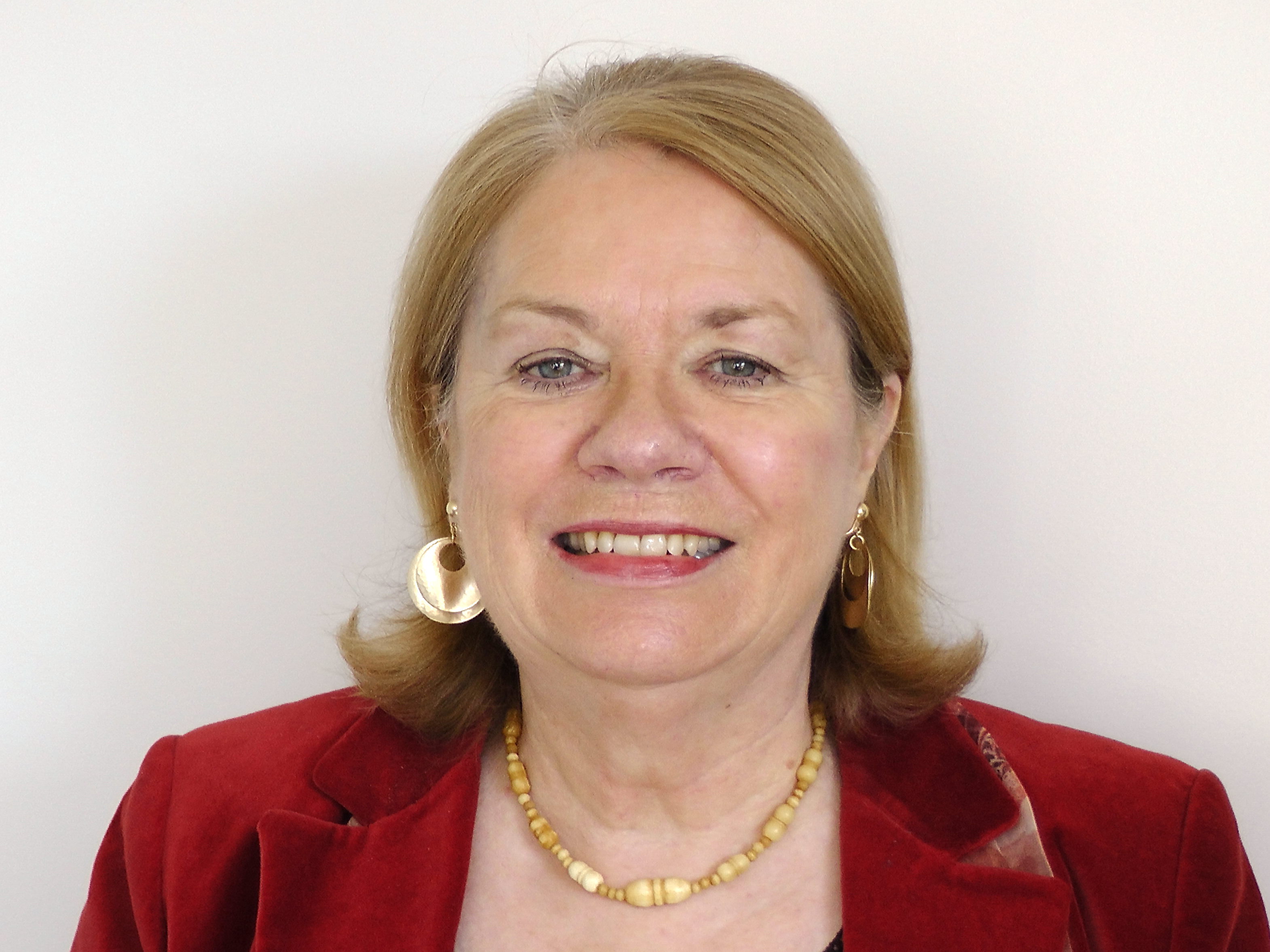
On May 13th, Dr. Lily Gardner Feldman presented ‘Germany as Model and Mediator for Northeast Asian Conflicts’ as part of the Transatlantic Global Agenda hosted by American Friends of Bucerius and the American Council on Germany at Alston + Bird LLP in New York City. Dr. Gardner Feldman is the Harry & Helen Gray Senior Fellow at the American Institute for Contemporary German Studies at Johns Hopkins University, and has recently published a book entitled “Germany’s Foreign Policy of Reconciliation: From Enmity to Amity.”
Her speech centered on Germany’s potential to take on a role as model and mediator for Northeast Asian conflicts. Dr. Gardner Feldman believes that while transatlantic relations are currently dominated by the tensions between Russia and the Ukraine, the Northeast Asian region could benefit from coordinated actions of the international community. Having insufficiently addressed its history and conflicts of the past and, more recently, having engaged in military initiatives over territorial disputes, Northeast Asia has become a fragile and potentially explosive region. As Germany has been addressing its own history for the past 70 years, Dr. Gardner Feldman believes that it could function as a model and mediator for reconciliation. With EU and US trade investments increasing in the region, such as the Trans-Pacific Partnership (TTP), both US and EU foreign policy have pivoted away from Afghanistan and Iraq to Northeast Asia. This shift in focus highlights the importance of strengthening and stabilizing the region both economically and politically.
Territorial disputes between Japan and China over the Senkaku/Diaoyu Islands have led to tensions in the past years, as have disagreements between Japan and South Korea over fishing zones in the Tokdo/Takeshima Islands. While these issues have gained some attention, larger historical issues have yet to be addressed. The apology to surviving South Korean ‘comfort women’ who had been forced into sexual slavery during WWII, and visits to the Yasukuni Shrine (which honors both victims and war criminals) by Japanese government officials, have led to irritation and tensions between Japan, China, and Korea. Furthermore, Japan’s revisionist approach to history, ranging from school textbooks to museums, gives rise to concern. Dr. Gardner Feldman pointed out that all three countries often utilize sentiments of nationalism for domestic political purposes, straining relations with their neighbors even further.
Dr. Gardner Feldman believes that the US has failed to address several issues relating to its own history, thus limiting its role as a mediator for reconciliation. Moreover, American policy concerning China has been inconsistent, sometimes perceiving China as a partner, and sometimes as a threat. Europe and Germany, however, have consistently viewed China as an economic ally, which is why, in addition to Germany’s experience in reconciliation, Germany has the credibility to be a model for Northeast Asia in dealing with historical issues and the reconciliation processes necessary to stabilize the region.
The German government, deeply influenced by the country’s history in two world wars, is reluctant to take a leading role in the matter. Despite this reticence, China and South Korea continue to cite German-Polish relations as an example for successful reconciliation, as well as looking to German society as a role model, where non-governmental organizations actively work to support reconciliation programs. By staying disengaged, Germany is allowing third parties to reinterpret its efforts, rather than explaining the true, and often arduous, nature of reconciliation. In her opinion, concrete initiatives that Germany could undertake are to convene officials from Japan in a neutral location such as Bonn, where foreign reconciliation began in Germany. A conference of new stakeholders, government and civil officials could meet to exchange experiences of successes and pitfalls.
When dealing with reconciliation processes, Dr. Gardner Feldman believes there are several essential lessons to keep in mind: first, the process of reconciliation is never-ending and messy. According to her, harmony is an ideal that cannot be achieved. Second, civil society actors can be a catalyst for reconciliation, even though reconciliation may encounter both political and popular opposition. Therefore, strong leaders are necessary within the government as well as the private sector. Third, territorial disputes cannot be resolved easily, which is why broader processes that involve both the historical and emotional aspects of conflicts are necessary. Another aspect to keep in mind is that compensation to victims cannot be determined solely on a legal basis. German reparations to Israel, for example, included contributions from organizations that had not existed during the Third Reich, but nevertheless felt it was their responsibility as participants of German society and the reconciliation process. Further, reconciliation requires partners, which is why Dr. Gardner Feldman believes that China and South Korea should engage in dialogue as well, instead of focusing solely on Japan.
The implementation of an institutional framework could prove essential for a successful reconciliation process; in the case of Northeast Asia, a trilateral free trade agreement in the region would be a step in the right direction. Dr. Gardner Feldman pointed out that acceptance of the past is not always characterized by formal apologies. She emphasized that victims do not have to forgive in order to advance reconciliation. This, however, requires the acknowledgement of a moral dimension, instead of focusing only on the pragmatic and financial aspects of reconciliation. Private actors in society, for example foundations and other institutions, could be the key to filling the space governments cannot. Lastly, Dr. Gardner Feldman emphasized that reconciliation requires a third outside party, much like the US during the German reconciliation process after WWII.
In Dr. Gardner Feldman’s opinion, the implications of these lessons is that a German initiative with US-involvement could lead to a new and genuine division of labor that could ease the potential of competition in the region through a cooperative balance of a US-EU partnership and NATO presence. Further, she recommended improving the coordination between the different trade partnership agreements and generally encouraging free trade. She ended by emphasizing that this was a singular period of potentially dangerous international consequences that requires provocative thoughts instead of timid reactions.
During the ensuing Q&A session, concerns about Germany’s role as a model were voiced and it was emphasized that Germany’s successful reconciliation process was largely due to the willingness to reconcile by all parties involved. Dr. Gardner Feldman pointed out that in her opinion, Germany has an obligation to share its experiences despite its reluctance to get involved, as Germany has now matured and there are no true alternatives in the international arena at the moment. This is especially important, as she believes that China and South Korea are picking up incorrect information about Germany’s reconciliation process and Germany has the obligation to correct these misconceptions. Germany could also see this as a further opportunity to address its history and continue a positive legacy in the post-WWII era.
K. Kempiners
Dr. Lily Gardner Feldman is currently the Harry & Helen Gray Senior Fellow at the American Institute for Contemporary German Studies at Johns Hopkins University. Dr. Gardner Feldman has published widely in the U.S. and Europe on German foreign policy, German-Jewish relations, international reconciliation, non-state entities as foreign policy players, and the EU as an international actor. She has a Ph.D. in Political Science from MIT.
The Transatlantic Global Agenda
A broad range of issues impact both Germany and the United States of America.
The Transatlantic Global Agenda, a discussion series hosted jointly by American Friends of Bucerius and the American Council on Germany, and supported by Alston & Bird LLP, acknowledges this by giving leads in the field of foreign policy the opportunity to exchange ideas and effectively share expertise.