Updates
Back to News
Paula Modersohn-Becker: Pioneer of Modern Art
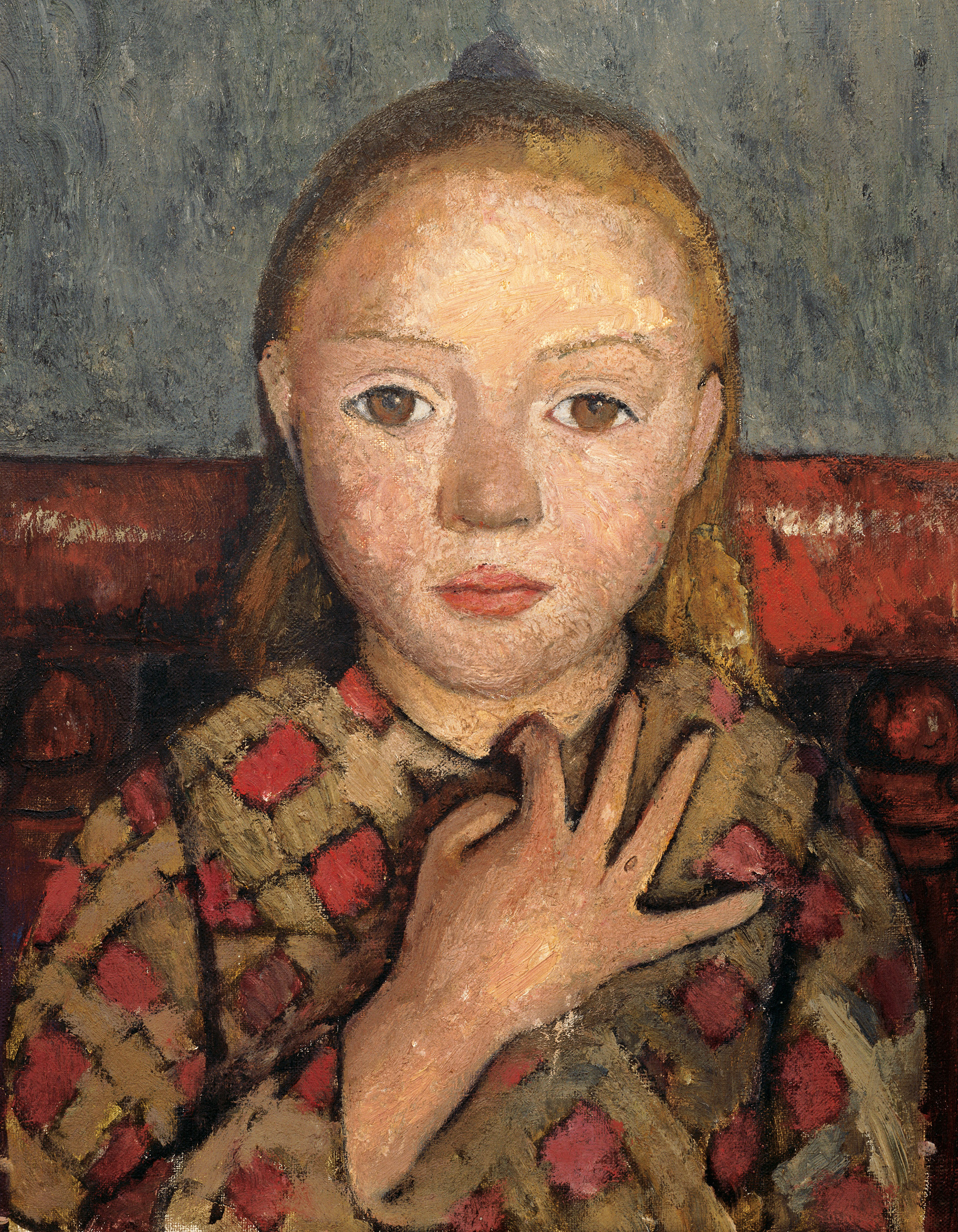
With Paula Modersohn-Becker: Pioneer of Modern Art, the Bucerius Kunst Forum presents a tightly edited reconsideration of this exceptional German artist’s works, on display from 4 February–1 May 2017.
In 80 works, the solo exhibition reveals the unique significance of Modersohn-Becker’s brief creative period, which took place between two radically different generations of artists, the later Impressionists and the Expressionists. The presentation offers a fresh take on the outstanding works of Modersohn-Becker thanks to a carefully curated selection of her paintings and drawings that also includes lesser-known works. Variations on the same subject are displayed and reveal how her unique pictorial language and methods developed over the course of her short artistic career. Although Modersohn-Becker’s idiosyncratic, avant-garde style was thought to be confusing and alienating during her lifetime, it is now understood as revolutionary and groundbreaking. This exhibition is the first to present the artist as a trailblazer of modernism and marks the first in the Modern Art Trilogy at the Bucerius Kunst Forum in 2017 and 2018.
The exhibition is curated by Professor Uwe M. Schneede and has been organised in cooperation with the Paula-Modersohn-Becker-Foundation in Bremen, Germany.
Just as Paula Modersohn-Becker (1876–1907) worked between two generations of artists, she also lived both intellectually and geographically between two entirely different worlds. After finishing her studies in Berlin in 1898, she moved to the secluded village of Worpswede near Bremen, fascinated by the atmospheric paintings emerging from the colony of artists based there. Her first landscape paintings were influenced by the natural lyricism characteristic of Worpswede. But rather than painting true-to-life landscapes like her fellow artists, Modersohn-Becker first contemplated the composition of each painting and only turned to her easel after deciding on specific landscape, shapes and colours.
She found no structures in place to support her unconventional and pioneering work in Germany: artists such as Kirchner, Beckmann, Klee, Marc and Kandinsky had not yet begun to produce their distinctive, revolutionary work, and there were no powerful patrons, dealers or collectors.
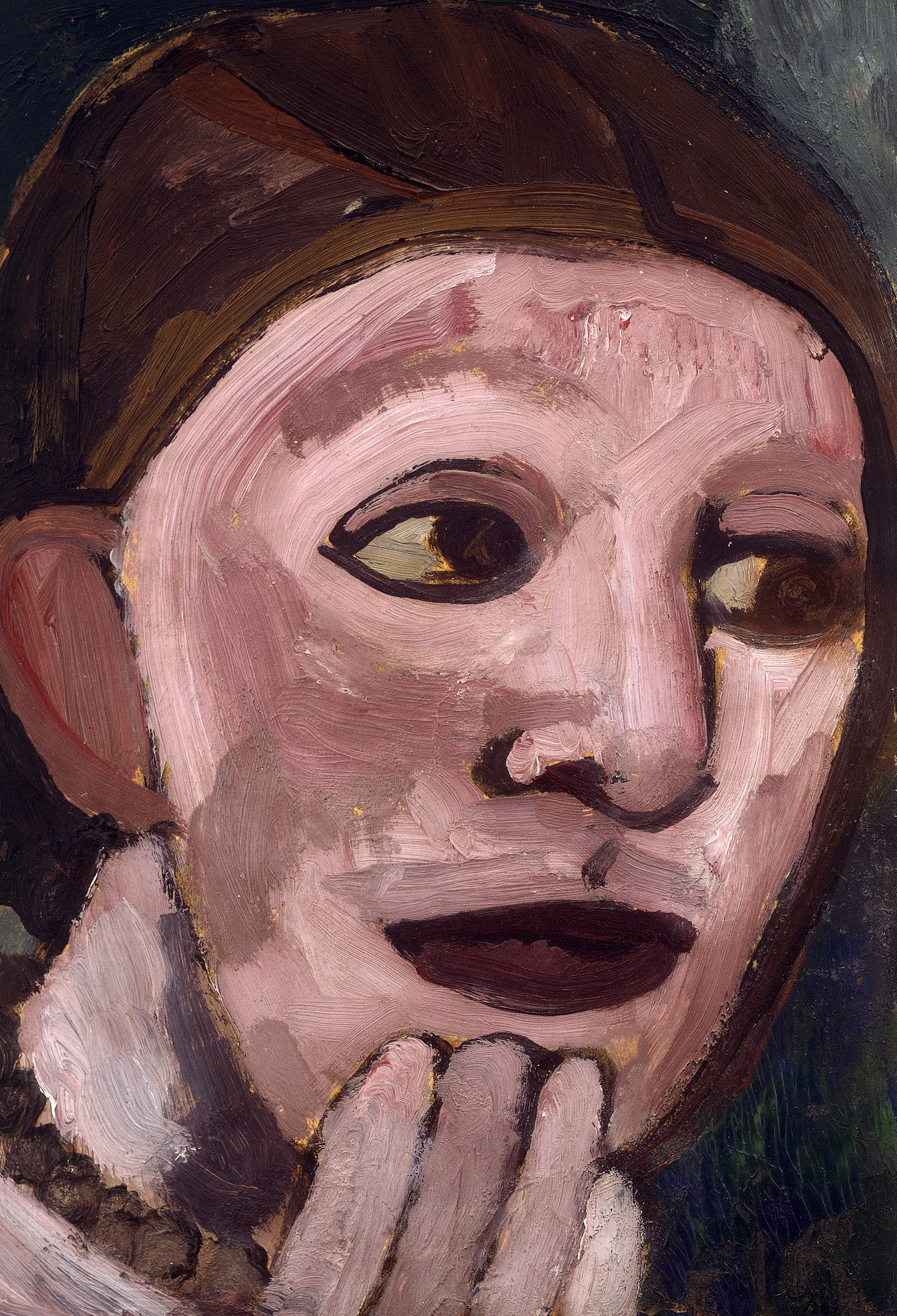
Modersohn-Becker found both role models and artistic freedom in Paris, where she developed and refined her unique approach to painting on numerous study visits. There, she was influenced by the works of the most modern but as-yet unknown painters, including Cézanne and Matisse, whom she quickly recognised as pioneering. She was inspired by unusual pictorial elements as well as unfamiliar combinations of shapes and colours. The artist harnessed the impressions gained on frequent visits to studios, galleries and museums to conduct her own experiments and to develop a specific visual language – and, with it, her unique iconography.
The exhibition Paula Modersohn-Becker: Pioneer of Modern Art at the Bucerius Kunst Forum shows how the artist used everyday motifs taken from her surroundings in Worpswede and freed them from clichés to reveal her own understanding of modernity. Modersohn-Becker stripped her recurring motifs – such as children and women, self-portraits, still lifes and landscapes – of their familiarity, removing all ornamental details and aspects of genre painting in order to establish a simplified, universal language of forms. Her portraits of children are characteristic of this approach: by absenting them from their everyday lives and taking away their individuality and external appearance, she endowed them with a certain dignity. In order to effect an estrangement of the familiar, Modersohn-Becker abstracted facial features to the point that they appeared mask-like. A self-portrait of the artist is presented as an example of this technique. While working on it, she created monotypes using first newsprint, then the back of a letter, which she continued to refine. In the final work, a semi-transparent mask is all that remains of her facial features; the individuality of her features has been stripped away as far as possible and distanced from the richly detailed original. These three works, which are shown together for the first time, at once reveal the artist’s unique, methodical approach and allude to her turn to abstraction in her final works.
The exhibition catalogue, edited by Franz Wilhelm Kaiser, Kathrin Baumstark and Uwe M. Schneede with contributions from Kathrin Baumstark, Simone Ewald, Karin Schick, Frank Schmidt, Uwe M. Schneede and Rainer Stamm, is published by the Hirmer Verlag in Munich (193 pages with full-colour reproductions of all the exhibition works, 29 Euro in the Bucerius Kunst Forum).
The exhibition is sponsored by ExxonMobil and Claus & Annegret Budelmann
For further press information and photos, please contact:
Lara Schuh, Press and PR, Bucerius Kunst Forum,
Telephone: +49 (0)40/36 09 96 78, Fax: +49 (0)40/36 09 96 71, presse@buceriuskunstforum.de